


Detecting Pollutants in Wastewater Using Light
15. September 2026
As part of the Thuringian Water Innovation Cluster, researchers at Leibniz-IPHT are developing photonic sensors to improve water quality monitoring.
How can traces of pharmaceuticals and industrial chemicals be detected quickly and reliably in wastewater? Researchers at Leibniz-IPHT are addressing this challenge in the KARLsens project. They are developing sensor chips with metallic nanostructures designed to detect specific pollutants using light. The goal is to create a measurement system that can monitor water quality directly at wastewater treatment plants, enabling more targeted and resource-efficient treatment processes.
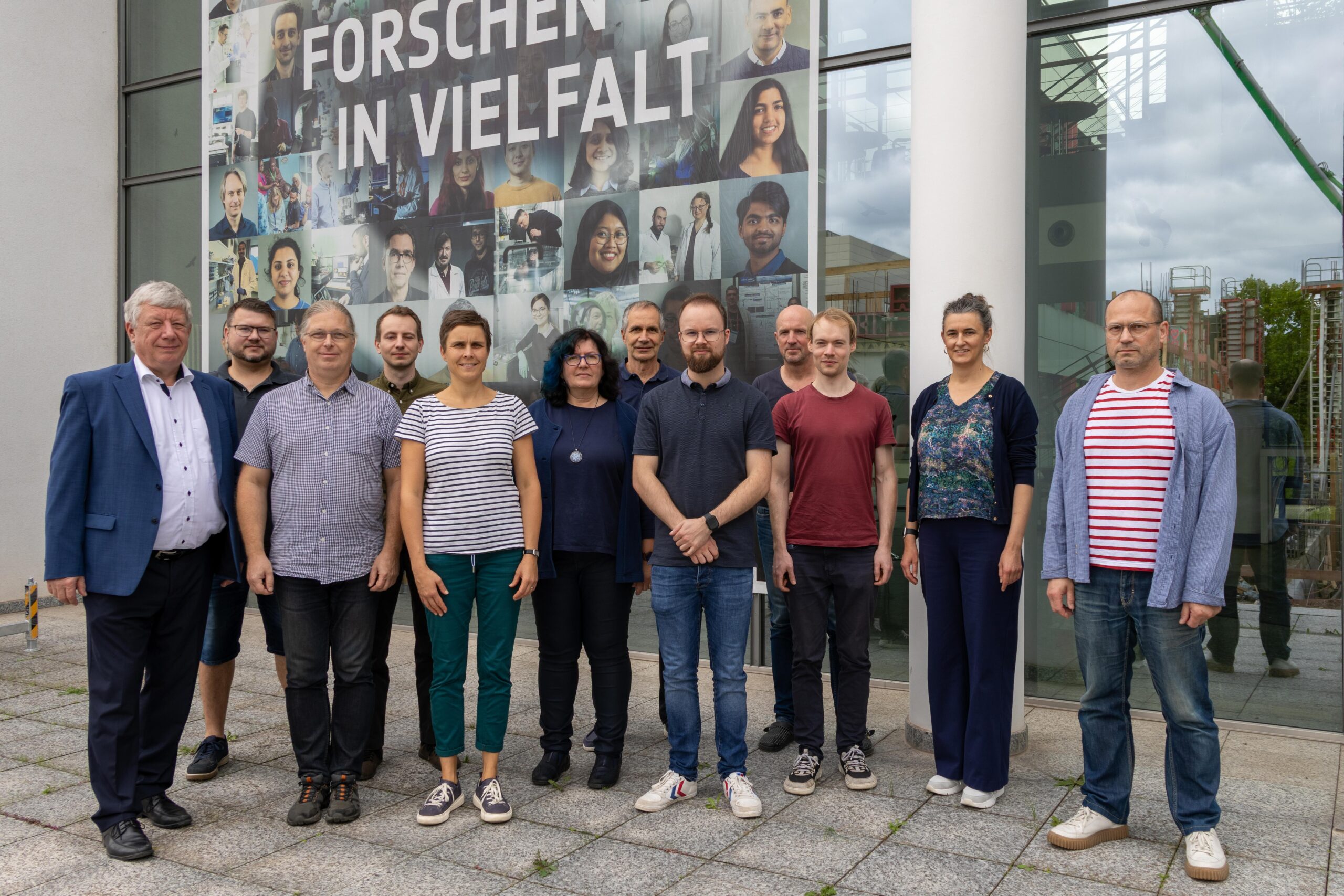
The project is part of the Thuringian Water Innovation Cluster (ThWIC), which entered its second implementation phase in September. During a project meeting at Leibniz-IPHT, the KARLsens partners coordinated the next steps in development and gained insights into sensor research and fabrication at the institute.
Learn more about the KARLsens project and the Thuringian Water Innovation Cluster (ThWIC): Thüringer Wasser-Innovationscluster
Contact

Scientific Contact

Prof. Dr. Wolfgang Fritzsche