


jETZT: Jena Tests New Models for Future Research Collaboration

10. September 2026
Friedrich Schiller University Jena, Leibniz IPHT, other non-university research institutes and the Free State of Thuringia are joining forces to test new ways of working across institutional boundaries. The jETZT project will explore how Jena’s research and innovation ecosystem can share expertise, infrastructure and talent more effectively – helping promising ideas move faster from research into practical and commercial applications.
The new pilot project, ‘jETZT – Jena Experimental Space for Transfer and Collaboration in Photonics’, provides a framework in which the partners can put new approaches into practice. Friedrich Schiller University Jena, the Fraunhofer Institute for Applied Optics and Precision Engineering IOF, the Leibniz Institute of Photonic Technology and the Helmholtz Institute Jena are working with the Free State of Thuringia to develop and test more flexible models of collaboration, including approaches that currently face legal or administrative barriers.
Building on Jena’s research strengths
The project builds on one of Jena’s particular strengths: close links between the University, non-university research institutes and technology-driven companies that have developed over many years. In photonics in particular, these links have created an internationally recognised science and innovation ecosystem spanning basic research, applied research and commercialisation.
With jETZT, the partners now want to take this collaboration a step further. Jena will become an experimental space for new models of cooperation. The partners will explore how research infrastructure can be shared more easily, how researchers can work more flexibly across institutional boundaries, and how knowledge and technology transfer can be accelerated. At the same time, they will identify legal and administrative requirements that currently make collaboration more difficult and develop practical solutions to overcome these obstacles.
“One of Jena’s great strengths is the way people and institutions work together across organisational and disciplinary boundaries. With jETZT, we are taking this a step further. We are not only connecting research and infrastructure, but creating new pathways for people and ideas between the University, non-university research institutes and industry. Jena will become a testing ground for how a more connected research and innovation system could work in the future,” says Prof. Dr Thomas Pertsch, Vice-President for Research and Innovation at Friedrich Schiller University Jena.
The project also contributes to the University of Jena’s strategic development. Under the guiding principle ‘Light. Life. Liberty. – Connecting People and Ideas’, the University focuses on connecting people, disciplines and institutions to enable new scientific ideas and strengthen their impact in academia, industry and society.
From research to application, faster
A key focus of jETZT is the shared use of high-quality research infrastructure. The partners want to make major research equipment, laboratory facilities, scientific services and other resources easier to share across institutions. They also plan to develop a cooperation platform and establish standardised procedures that meet legal requirements.
In the longer term, the benefits should extend beyond the participating research institutions. Technology-driven companies and start-ups should also gain easier access to scientific infrastructure and expertise. This could make better use of existing infrastructure and help new research findings reach practical applications more quickly.
“In Jena, we have seen for many years how much becomes possible when institutional boundaries do not limit the way we think about research. At Leibniz IPHT, we work closely with the university, the university hospital, non-university research partners and companies across a wide range of structures and networks. This allows us to align photonic technologies with specific medical needs and, together with companies and start-ups, consider pathways to application at an early stage. What matters to us is that research does not end with a publication, but is carried forward and can make an impact in medicine, business and society. jETZT gives us the opportunity to further develop the conditions that make this possible and to turn this established culture of collaboration into a model for even more effective knowledge and technology transfer,” says Prof. Jürgen Popp, Scientific Director of Leibniz IPHT.
New career paths across institutions
The project’s second focus is on the people who make up the research and innovation system. jETZT will test new career models spanning universities, non-university research institutions and industry. Staff mobility, joint professional development and cross-institutional career paths are designed to make it easier to exchange knowledge and experience.
For researchers, this should make it both easier and more attractive to move between basic research, applied research and industry over the course of their careers – or to work simultaneously in different institutional settings. At the same time, the partners aim to attract research talent to Jena and Thuringia and create conditions that encourage researchers to remain in the region over the long term.
“Jena shows what can be achieved when research and industry work together to develop cutting-edge technologies. With the Jena experimental space, we want to reduce bureaucratic obstacles and make it easier to translate research into applications. In photonics in particular, we can build on decades of close links between basic research, applied research and industry. The solutions developed here could also provide fresh impetus for Germany’s research and innovation system,” says Prof. Dr Andreas Tünnermann, Director of Fraunhofer IOF.
Testing solutions with potential beyond Jena
For collaboration to become genuinely easier, jETZT also addresses the legal and administrative conditions that govern it. Issues such as the shared use of infrastructure, cross-institutional deployment of staff, tax requirements and billing procedures should not have to be resolved from scratch for every new collaboration. Instead, the partners aim to pool their experience and standardise procedures in ways that make collaboration easier while ensuring legal certainty.
The Free State of Thuringia is supporting this process through the Thuringian Ministry for Education, Science and Culture and the Thuringian Ministry for Economic Affairs, Agriculture and Rural Areas. The partners will also examine where existing regulations could be adapted to facilitate collaboration.
“With jETZT, we are drawing on Jena’s exceptional concentration of research institutions and the close links between them to test, in practical terms, how collaboration can become simpler and more effective. Our aim is to work with the research institutions to develop solutions that give research and knowledge transfer greater flexibility while providing legal certainty. What works in Jena could ultimately be relevant to other research hubs as well,” says Christian Tischner, Thuringia’s Minister for Education, Science and Culture.
Many of the questions addressed by jETZT extend well beyond Jena. Universities and non-university research institutions throughout Germany face similar challenges: making cross-institutional collaboration easier to organise, using infrastructure more efficiently and creating more flexible career paths. The approaches developed in Jena will therefore be assessed for their transferability, evaluated from a research policy perspective and made available across Germany.
In this way, the Jena experimental space is intended to become a model with relevance far beyond the region – for a research and innovation system in which people, ideas and resources can connect more easily.
jETZT – Jena Experimental Space for Transfer and Collaboration in Photonics
Funding period: 1 July 2026–30 June 2031
Funding: €500,000 from the Volkswagen Foundation
Participating partners:
- Friedrich Schiller University Jena
- Fraunhofer Institute for Applied Optics and Precision Engineering IOF (Fraunhofer IOF)
- Leibniz Institute of Photonic Technology (Leibniz IPHT)
- Helmholtz Institute Jena (HI Jena)
- Thuringian Ministry for Education, Science and Culture (TMBWK)
- Thuringian Ministry for Economic Affairs, Agriculture and Rural Areas (TMWLLR)
jETZT is one of ten projects across Germany funded by the Volkswagen Foundation to test new approaches to developing Germany’s research and innovation system between 2026 and 2031.
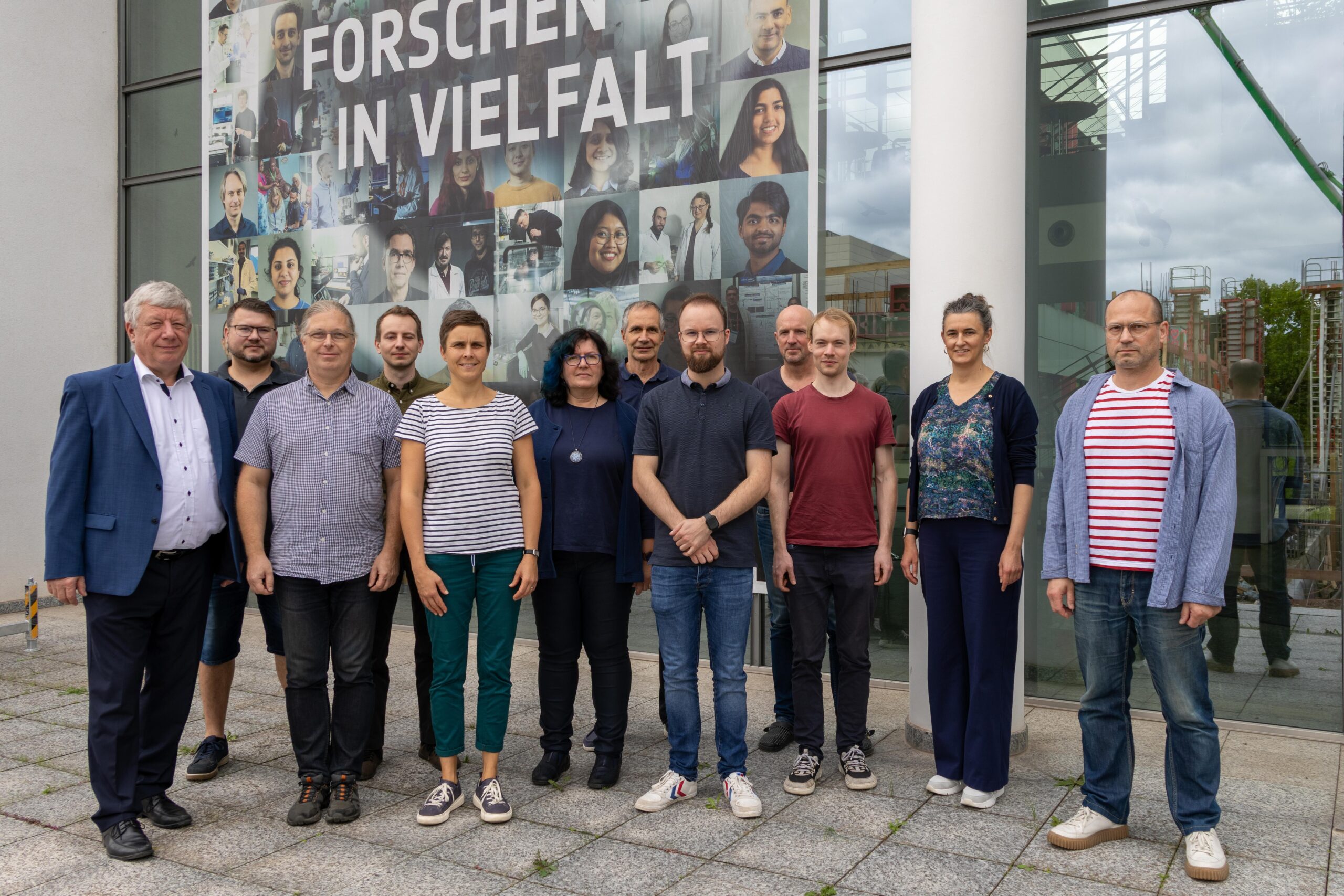
Photo: Jens Meyer (University of Jena)
Contact

Related News

Third party cookies & scripts
This site uses cookies. For optimal performance, smooth social media and promotional use, it is recommended that you agree to third party cookies and scripts. This may involve sharing information about your use of the third-party social media, advertising and analytics website.
For more information, see privacy policy and imprint.
Which cookies & scripts and the associated processing of your personal data do you agree with?
You can change your preferences anytime by visiting privacy policy.