

Of Light and Data

27. September 2025
New Paths in Diagnostics With Artificial Intelligence and Photonics for More Precise Medical Decisions
Which antibiotic does a patient with a life-threatening infection need? What organic chemicals are polluting a body of water? And how can the images from a fiber probe be improved so that doctors can clearly see the boundaries of a tumor in real time during surgery? To answer these questions, researchers at Leibniz IPHT are using a combination of optical methods and artificial intelligence (AI).
Photonic methods use light to analyze biological materials and processes, while AI algorithms help to extract meaningful information from the large amounts of data generated. For example, AI is behind the flexible camera probe that enables rapid tumor diagnosis during surgery (see page 13 of this magazine). This miniaturized endoscope provides high-precision images that may one day enable surgeons to distinguish between healthy and tumor tissue. The spectroscopic data is automatically analyzed and translated into classic standard diagnostic images with a resolution comparable to that of high-end microscopes.
Thomas Bocklitz and his team in the Photonic Data Science research department have spent years developing the algorithms that enable this precise diagnosis. The starting point was a computer-assisted process for a compact microscope for rapid cancer diagnosis in the Medicars project. “We trained AI algorithms together with pathologists,” explains Thomas Bocklitz. By taking multimodal images of a tissue sample, which is then classically stained and examined under a microscope by a pathologist, the algorithm learns to distinguish between healthy and diseased areas. The accuracy of this method is greater than 90 percent.
From Pixel to Detail
Designing the camera probe was particularly challenging: Although the probe’s flexibility allows it to capture detailed images of the inside of the body, the image quality was initially poor. To solve this problem, Dr. Marko Rodewald and Thomas Bocklitz developed a method to reconstruct the images so that they accurately represent the morphochemical structure of the tissue. These corrected images are then converted into computer-generated H&E images, a standard procedure in pathology, which show the tissue structure in detail.
Awarded the ERC Consolidator Grant
In September 2023, Bocklitz received the prestigious ERC Consolidator Grant to expand this pioneering approach and prove its feasibility. In the STAIN-IT project, the team is developing a digital staining method for cancer diagnostics based on multimodal imaging. Deep learning models will be used to mimic immunohistochemical staining methods commonly used for differential diagnosis and therapy decisions. STAIN-IT promises to be a fast and cost-effective alternative to conventional methods that can be directly integrated into everyday clinical practice and provides clear insights into tissue changes.
The ERC Consolidator Grant of approximately 2 million euros recognizes not only the scientific excellence of Thomas Bocklitz, but also the supportive research environment at Leibniz IPHT, the Friedrich Schiller University and the University of Freiburg, as well as the University Hospitals of Jena, Bayreuth and Erlangen. In this project, researchers from various disciplines are working together to improve diagnostic reliability and gain new insights into disease mechanisms.
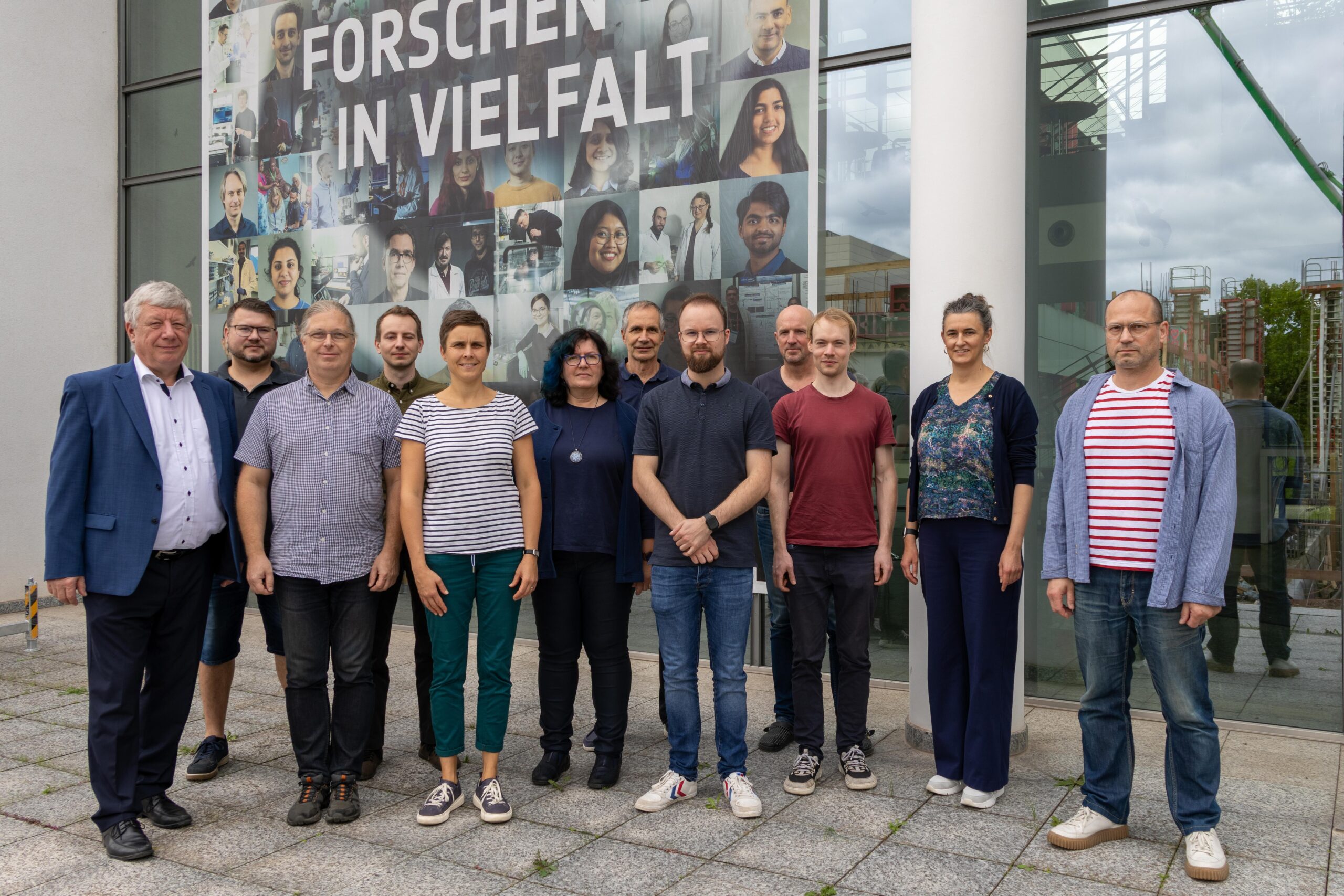
Thomas Bocklitz has been working at Leibniz IPHT since 2016 and has been head of the Photonic Data Science research department since 2019. In spring 2023, he was offered and accepted a professorship at the University of Bayreuth. Jena then launched its own appointment procedure – with success. A decisive factor for this appointment was the close interdisciplinary cooperation within Leibniz IPHT and its Jena network in research and clinics, from which Bocklitz was able to obtain the experimental spectroscopic data for the development of new AI methods. Thomas Bocklitz has accepted a W3 professorship for Data Science in Photonics at FSU Jena at the beginning of 2024. “I am very much looking forward to a fruitful collaboration with my team and the Jena cooperation network.”
Original publications: https://doi.org/10.1364/BOE.477384,
https://doi.org/10.5220/0011889700003411,
Contact

Related News
Third party cookies & scripts
This site uses cookies. For optimal performance, smooth social media and promotional use, it is recommended that you agree to third party cookies and scripts. This may involve sharing information about your use of the third-party social media, advertising and analytics website.
For more information, see privacy policy and imprint.
Which cookies & scripts and the associated processing of your personal data do you agree with?
You can change your preferences anytime by visiting privacy policy.