


Drawing is an Art
2. Juli 2019
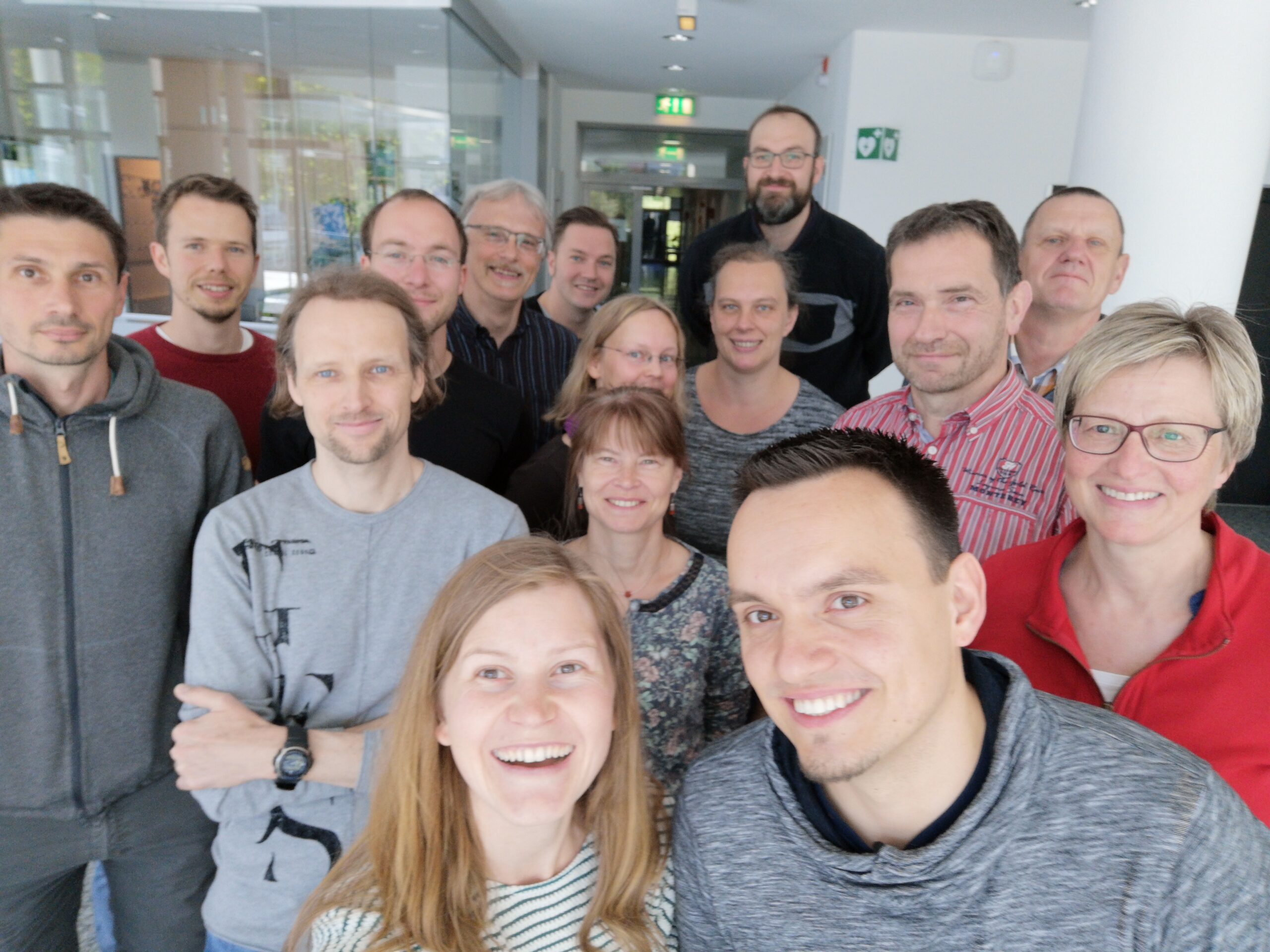
How a mixed team of experts works hand in hand and covers the entire technology chain from quartz glass powder to special optical fibers: 468 nm editor Andrea Borowsky visited the working group Optical Fiber Technology for one day.
On the ground floor’s central wing, there’s a hustle and bustle in the working group Optical Fiber Technology. Katrin Wondraczek, who took over from Kay Schuster in June 2018, sits in the corner office at the back and is still right in the middle. A member of staff comes by, there is the possibility to participate in a research group with another institute, he needs a go this morning. Head of department Tomáš Cižmár knocks and inquires about a project partner. Sergei Mikhailov, a Russian guest doctoral student from Belgium, sticks his head in the door and wants to talk about the slides for an upcoming lecture. Suddenly the news comes that two Americans are on site for a spontaneous laboratory tour. “Such requests are not uncommon,” says Katrin Wondraczek on the way to the fiber drawing tower. “Even short-term guided tours suitable for children and laypersons are nothing new for us.“
The working group is well equipped for visitors. Posters on optical fibers and preform production can be seen in the corridors and laboratories. In the stairwell of the fiber-drawing tower there are lab coats, hoods and shoe covers, which have to be worn by everyone who is allowed to venture into the clean area. In the large drawing tower, Jens Kobelke takes a plastic box from the metal cabinet, in which fiber drawing parts, preform parts and other exhibits are stored. At first glance they look like decorative window decorations, at second glance one is amazed at how fine and filigree the structures in the glass elements are. The different designs bear speaking names like “Revolver” or “Butterfly”.
The structure and optical properties of a glass fiber mainly depend on the underlying preform. Whether MCVD (Modified Chemical Vapor Deposition), REPUSIL (Reactive Powder Sintering Technology), Stack-and-Draw (stacking and warping of different glass elements) for structured preforms or an ingenious combination of these different processes is used for their production is decided on anew for each desired fiber.
In the MCVD laboratory, Stefan Pochert and Florian Lindner discuss whether the planned preform should better be produced by solution or gas phase doping. When you enter the laboratory, the first thing that catches your eye is the large glassmaker lathe. In the fume cupboard next to it are the doping substances in evaporator vessels. The rotating quartz glass tube is heated in the flame of an oxyhydrogen gas burner and a gas mixture of oxygen and the various dopants is introduced. Layer by layer the different oxides are deposited on the inside of the tube before it collapses to the final MCVD preform. “You have to be systematic and very precise,” explains Claudia Aichele, engineer in the MCVD laboratory. The process is the most common manufacturing method for preforms with very homogeneous cores up to 6 mm in diameter.
The REPUSIL process was developed at Leibniz IPHT for even larger diameters. Robert Müller is a materials scientist with heart and soul. On his desk are small plastic boxes and tubes with powders and samples. The ceiling of his office is decorated with crystal lattice models. He explains the complex topic with zeal and in vivid pictures. A high-purity doped quartz glass granulate is produced for the production of REPUSIL glass. This is then compacted into a green glass granule using an isostatic press similar to the ones used in the production of synthetic diamonds. Since the smallest impurities, such as traces of iron, impair the light transmission of the glass fibers, special cleaning steps follow. “The purer the preform, the more transparent the optical fiber,” says Robert Müller.
Before a preform can be warped into a fiber on one of the four drawing lines, it passes at least once through the experienced hands of Wolfgang Ludwig. He has been a glassblower at the institute for over 30 years. No fiber is created without his help. He prepares output tubes, prepares the rod packings, fits the tightening rods precisely and realizes the pressure connections for microstructured fibers that have been devised with the fiber drawers.
While it is getting hot in the glass blowing workshop, preparations are underway in the small fiber drawing tower. „I have the checklist in my head,” explains Adrian Lorenz, while he routinely rinses the drawing furnace of the plant with argon before heating it up to 2000 °C. “Rinsing is a step that must never be forgotten, “otherwise we’ll have a fire brigade problem here”. He has already cleaned the preform and placed it in the oven. Today, in cooperation with FBGS, a spin-off of Leibniz-IPHT, several thousand fiber Bragg gratings are to be inscribed into the 2 km long fiber during drawing. For this purpose, the pulsed UV laser next door is brought to operating temperature and adjusted.
Then it starts. Adrian Lorenz puts on the big glove and slowly guides the hot preform rod down from the drawing furnace until a thin fiber is formed. From below, Jens Kupis takes over, who attaches the fiber to the main wheel, the capstan, which determines the draw-off speed. As soon as the desired diameter is reached, the fiber is threaded into the coating nozzle. The tempered coating material is filled into the nozzle and the fiber is evenly coated with a protective polymer skin. The finished fiber appears fragile, but is surprisingly flexible and very stable.
The small fiber drawing plant has been in place for 20 years and was built by Jens Kupis himself. He calls it “upscale craftsmanship”, his team members say with a wink. It is warm and loud in the laboratory. The ventilation of the UV curing lamps rushes, the laser clatters. It smells a little like the coating material.
“We’re doing research to make other people’s research possible,” explains Anne Matthes. “‘From Ideas to Instruments’. Depending on the requirements, we work with the idea providers to put together the appropriate manufacturing methods for the preform. The desired fiber is then drawn from the preform.” Most fibers are produced for projects. The team is currently working with Torsten Frosch’s research group on a highly complex hollow core fiber for use in gas sensor technology. Only recently, the 1111st microstructured fiber was celebrated.
The fiber drawers are a well-rehearsed team. Anne Matthes is monitoring the drawing parameters, while Adrian Lorenz takes care of the fiber – he takes samples, changes coils and refills the coating. Jörg Bierlich comes down the stairs at breathtaking speed. “As long as it is a fiber without a special structure, these are tried and tested processes that are very easy to control,” he explains. “With complex fibers, we sometimes have to juggle all drawing parameters such as temperature, pressure and speed simultaneously over four floors. Then you start to sweat.” In addition to the laboratory work, the scientists sit in the office, write drawing or manufacturing protocols, evaluate tests and plan for the next projects. Production parameters are meticulously recorded and stored separately for each of the drawing lines in a series of folders with the tower abbreviations “Quartz I”, “Quartz II”, “Quartz III” and “Quartz IV”.
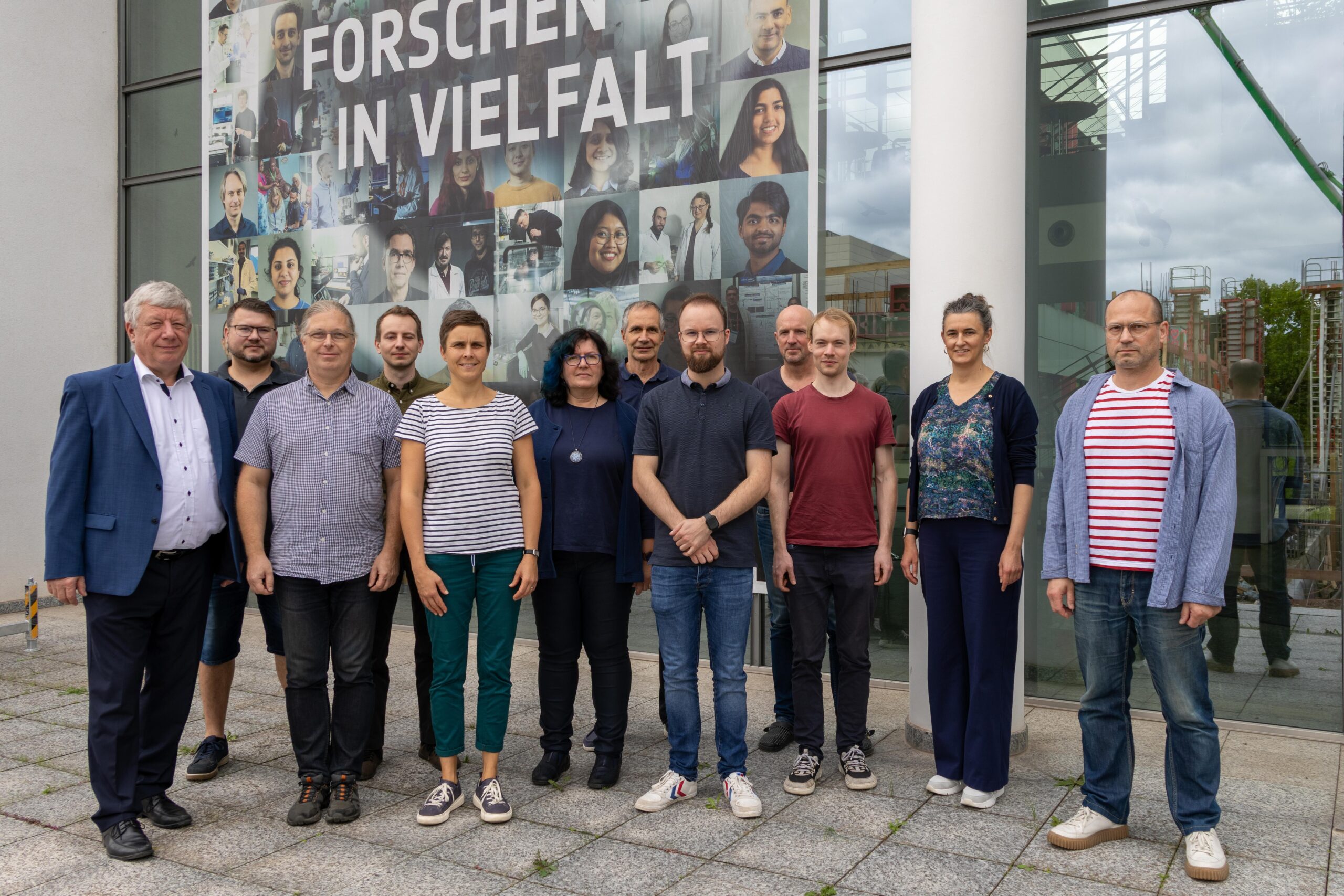
The members of the working group divide their tasks efficiently and there is a harmonious atmosphere. Every Monday the whole group meets over coffee or tea for a big team meeting, where everyone is updated about recent developments and priorities are agreed upon. Albrecht Graf, a colleague from the neighbouring department, says: “Working with this team is a pleasure.“ The human aspect is very important. This can be seen in the well-rehearsed work processes as well as in the warm-hearted farewell to future retirees. Most colleagues of the drawing team bring lunch with them from home. “Longer experiments can sometimes go into lunchtime or beyond. That’s why lunch is spontaneous,” says Adrian Lorenz. “Works of art take time.“
Contact

Related News
Third party cookies & scripts
This site uses cookies. For optimal performance, smooth social media and promotional use, it is recommended that you agree to third party cookies and scripts. This may involve sharing information about your use of the third-party social media, advertising and analytics website.
For more information, see privacy policy and imprint.
Which cookies & scripts and the associated processing of your personal data do you agree with?
You can change your preferences anytime by visiting privacy policy.