


“We Just Have Great Chemistry”: How Two Researchers Complement Each Other as a Leadership Tandem

11. Februar 2026
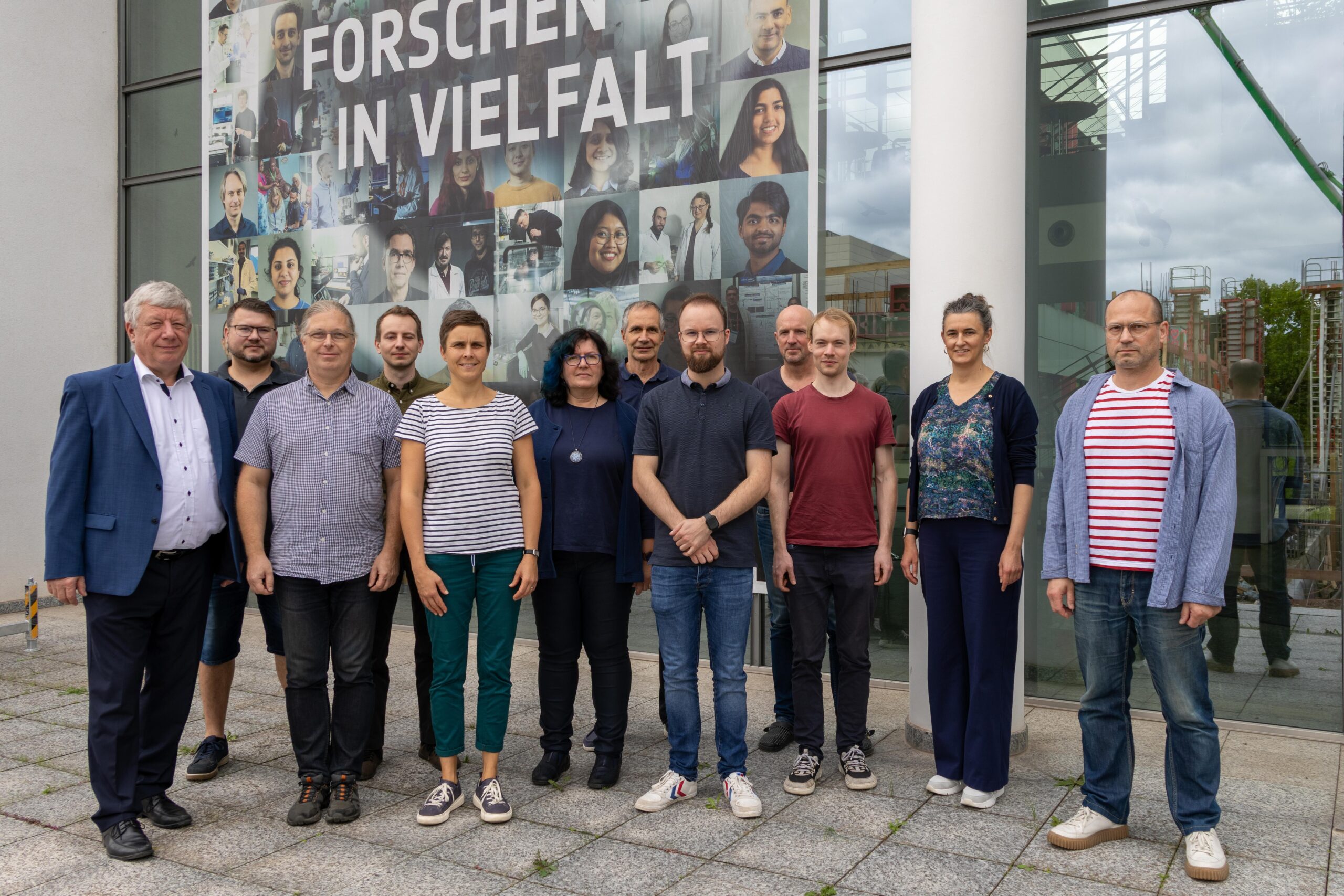
It works both professionally and personally. For nearly two years, Anuradha Ramoji and Susanne Pahlow have been leading the Applied Biospectroscopy and Bioassays group within the Spectroscopy/Imaging research department at Leibniz IPHT.
As group leaders, they jointly drive forward optical detection methods for biomedical research: Anuradha Ramoji as an expert in Raman spectroscopy in clinical settings, and Susanne Pahlow with tailored sample preparation strategies. In this interview, they explain how they complement each other and what matters most to them in their collaboration.
How did you first get to know each other?
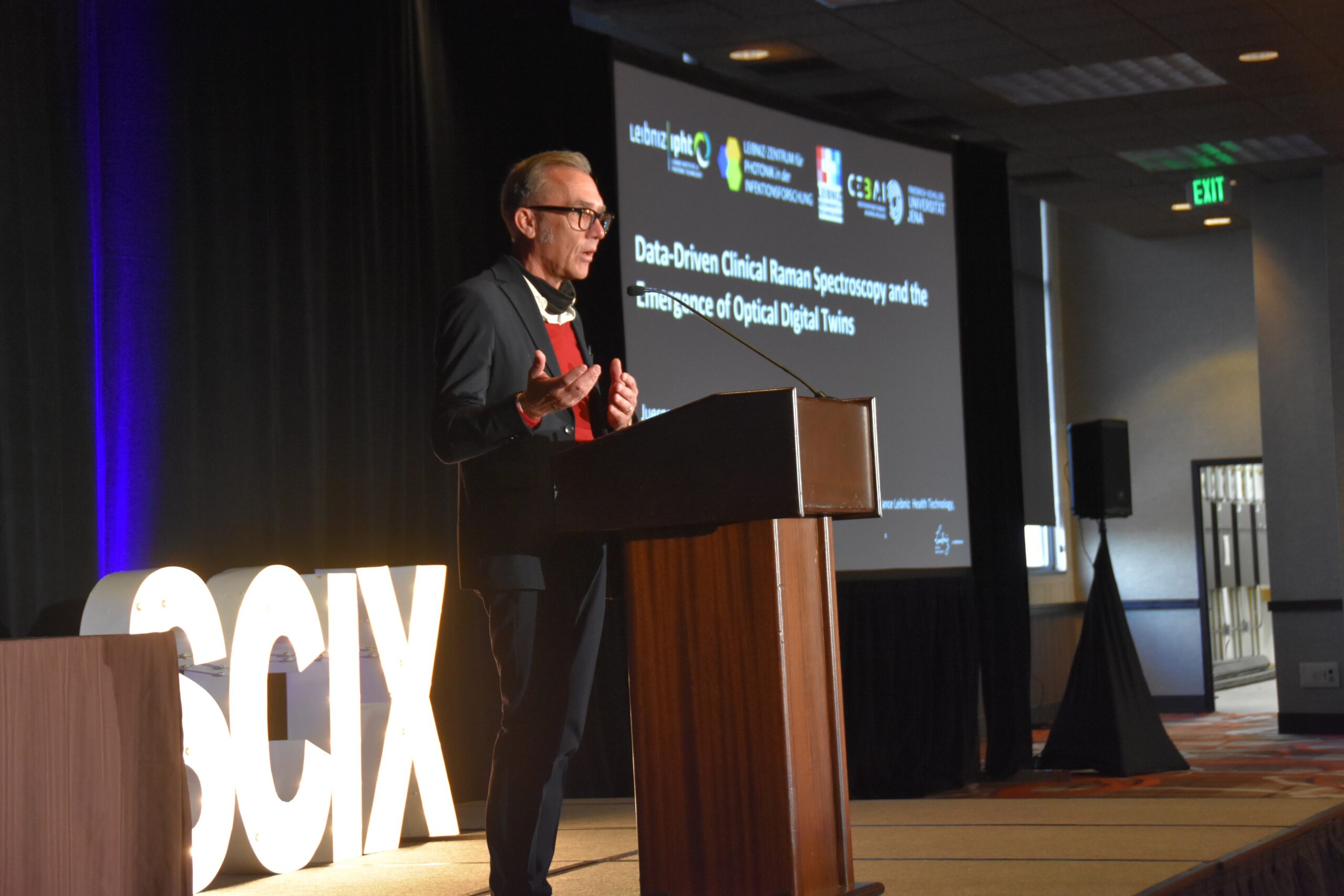
Susanne: Although we had both been at the institute for many years – I since 2009 and Anu since 2008 – we hardly interacted because Anu was working at the university hospital and I was based at the Center for Applied Research (ZAF). We really got to know each other in 2019 at SciX in Palm Springs. That’s where we realized we had a lot in common, including similar challenges in our work.
Anuradha: Over the past few years, we’ve had coffee together every Friday and discussed many different topics. That’s how I got to know Susanne as a person and understood how she works.
How do your areas of expertise complement each other?
Susanne: From a scientific perspective, it makes perfect sense to connect our fields. I mainly focus on sample preparation, while Anu has extensive experience in Raman spectroscopy, particularly in clinical applications. This combination allows us to extract much more from our projects.
Anuradha: I only carry out sample preparation to the extent necessary. Susanne has deep knowledge and a special talent in this area – she has “magic hands” when it comes to isolating bacteria and viruses from samples. Her expertise complements my work extremely well.
How do you collaborate scientifically?
Susanne: Clean and precise sample preparation is crucial for our analyses. I develop strategies to isolate microorganisms such as bacteria and viruses from complex matrices and prepare them for analysis. This forms the basis for many of our projects.
Anuradha: Susanne optimizes the samples for Raman analysis, significantly improving the quality and interpretability of our results. I specialize in Raman spectroscopy, a method that enables us to obtain chemical and structural information from samples. In clinical studies in particular, I use this technique to analyze biological samples and support diagnostics.
What research questions are you working on?
Susanne: One example of our successful collaboration is the SARS-CoV-2 DX project. Here, we developed methods to detect the virus and quantify viral load.
Anuradha: Within the Leibniz Center for Photonics in Infection Research (LPI), we are working on a Raman spectroscopic platform for differentiating white blood cells as part of the Basic Technologies (BT2) area. Susanne oversees sample preparation, while I am responsible for the Raman spectroscopic analysis.
How did you come to take on the group leadership?
Susanne: It wasn’t originally planned. In a career development meeting with our Scientific Director, Jürgen Popp, he suggested that I might lead my own group in the future. That surprised me at first because I had always seen myself more in the background. But Anu strongly encouraged me and gave me the confidence to take on this role. Together with her, I feel secure in this position.
Anuradha: I knew Susanne could do it. We had many discussions, and I always encouraged her to seize this opportunity. We simply have great chemistry, and I’m glad we’re taking this path together.
Susanne: We support each other and learn from one another.
Anuradha: Susanne has a particular talent for organization and planning, while I tend to be more spontaneous. This combination works very well. We also come from different cultural backgrounds – Susanne from Germany, I from India. She understands how people communicate here and gives me valuable advice, for example on how to phrase emails diplomatically. It’s always helpful to take a step back and approach things diplomatically—even if you don’t always win, you at least avoid losing.
What is important to you in working with your team?
Susanne: We communicate clearly how we envision our collaboration and remain open to adjustments if something doesn’t work. A culture of discussion is important to us. Everyone should feel valued and have the opportunity to achieve their individual goals.
Anuradha: We want to establish routines without overwhelming our team members. Transparency and autonomy are important to us. Trust is essential. We aim to create an atmosphere where everyone feels safe to speak openly about difficulties.
How do you support your team members?
Susanne: We plan regular meetings to discuss professional growth. We want to understand how our team members see their roles, what goals they pursue, and how they would like to grow. Some aspire to leadership positions, others want to specialize further in their field. We support this through training opportunities or new project responsibilities.
Anuradha: We make sure our team members feel valued and taken seriously. It’s important that they enjoy their work, even though the pressure in science can be high. Personal conversations help us understand what they need.
Susanne: We want to be approachable and see our team members at least once a week. That’s why we place great emphasis on regular team meetings. Since our team is spread across three locations, this is organizationally challenging. What matters is that everyone knows: we are there to provide support when needed.
What advice would you give to young female scientists aspiring to leadership positions?
Susanne: I would encourage young female scientists to have the courage to actively take the next career step – even if they still doubt themselves. They should give themselves the opportunity to grow into such a role. Once in the position, it is crucial to deliberately seek exchange with peers in comparable roles. A small, trusted network is invaluable. It is not about having others solve one’s challenges, but about creati ng a safe space where doubts can be addressed openly and diff erent perspecti ves can be shared. Personally, I benefit greatly from this exchange – whether to discuss new ideas or simply to hear, “I’ve been there, I’ve experienced it too.”
Anuradha: Young researchers are often either insecure or so deeply involved in their daily tasks that they rarely take time to pause and reflect. Excellent research is important. But sustaining high performance over time requires more than technical expertise: it takes the courage to trust yourself and continue your path step by step. This conscious process of development broadens horizons and deepens understanding. While a few may be born with natural leadership qualities, for most, leadership is developed through persistent effort, resilience, and a willingness to explore and grow. Or, in short: seek to grow.
Contact

Related News
Third party cookies & scripts
This site uses cookies. For optimal performance, smooth social media and promotional use, it is recommended that you agree to third party cookies and scripts. This may involve sharing information about your use of the third-party social media, advertising and analytics website.
For more information, see privacy policy and imprint.
Which cookies & scripts and the associated processing of your personal data do you agree with?
You can change your preferences anytime by visiting privacy policy.