

- Home
- Research
- Nanobiophotonics
- Projects
- Detection of Micropollutants in Wastewater
Detection of Micropollutants in Wastewater
KARLsens: Development of a photonic measurement system for on-site monitoring of micropollutants in wastewater in accordance with KARL
Runtime: 01.04.2026 - 31.03.2029
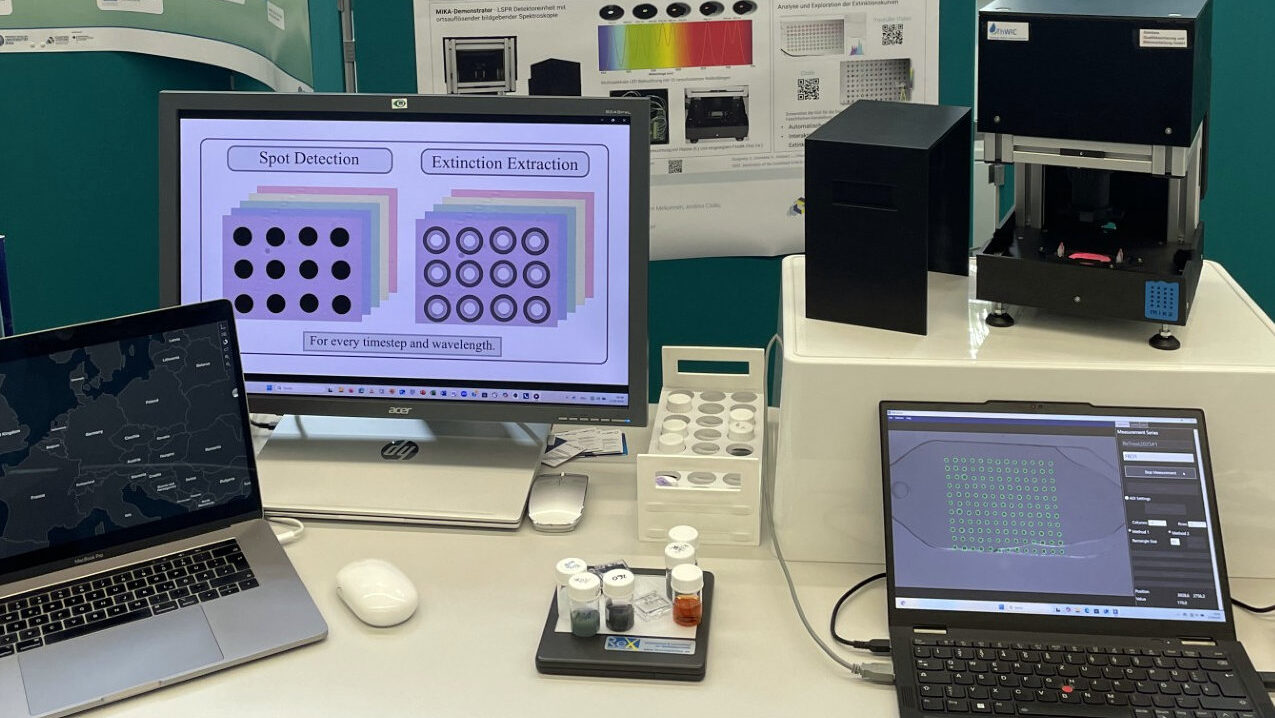
The ThWIC project KARLsens addresses the comprehensive, digital and quasi-continuous monitoring of anthropogenic pollutants in industrial and municipal wastewater.
Micropollutants such as pharmaceutical residues and industrial chemicals that cannot be removed by the current three-stage wastewater treatment process pose a significant risk to human and animal health. Detecting these contaminants in treated wastewater is therefore of major importance. Following a European Union decision in 2024, the revised Urban Wastewater Treatment Directive (KARL) was adopted. It requires these substances to be removed through a fourth treatment stage in the coming years, with implementation phased in between 2033 and 2045. Polluters such as the chemical industry will also be required to demonstrate the extent to which they discharge these micropollutants.
This is where KARLsens comes in. Launched as part of the Thuringian Water Innovation Cluster (ThWIC), the project aims to develop an innovative measurement system that can automatically and regularly detect selected trace substances relevant to the directive. The system uses innovative photonic detection principles based on the specific optical properties of metallic nanostructures known as localized surface plasmon resonance (LSPR). The nanostructures convert the specific binding of pollutants to receptors into an optically readable signal. The KARLsens measurement system uses two intelligent modules to monitor chemical contaminants in wastewater: one module (HF module) provides a rapid overview of pollutant levels, while the other (MA module) provides more detailed information.
The team at Leibniz IPHT is responsible for developing microarray sensor chips with plasmonic sensor nanostructures. It is also developing the multiplex bioassay required to detect the pollutants in the MA module. This will enable wastewater treatment plants to be managed more effectively, conserve resources and provide better long-term protection for our water bodies.

Partners