


Visit From Federal and State Representatives Underscores the Importance of the LPI for Translational Infection Research

26. Februar 2026
With the Leibniz Centre for Photonics in Infection Research (LPI), a translational centre is being established in Jena to transfer light-based innovations from research into medical application.
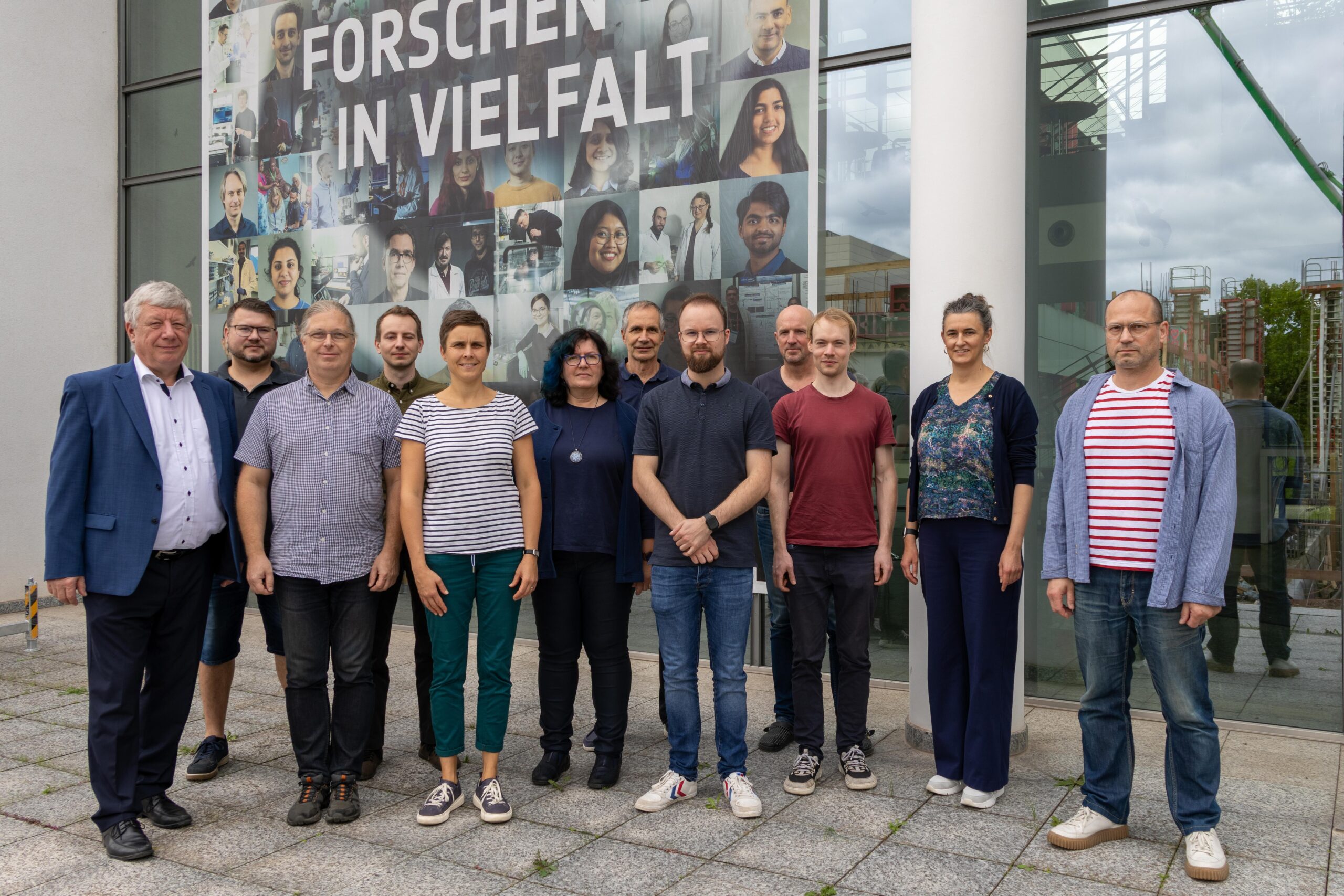
A joint delegation from the Federal Ministry of Research, Technology and Space (BMFTR) and the Thuringian Ministry for Education, Science and Culture (TMBWK), led by State Secretaries Dr. Rolf-Dieter Jungk and Prof. Dr. Steffen Teichert, visited the LPI on 16 February 2026 at the Leibniz Institute of Photonic Technology (Leibniz IPHT) in Jena. In addition to the latest developments and strategies of the LPI, the meeting addressed the centre’s future perspectives and its role within Germany’s High-Tech Agenda.
The global rise in antimicrobial resistance is increasingly complicating the effective treatment of infectious diseases. The LPI addresses the urgent need for rapid diagnostics and personalised therapies in this context by accelerating and supporting the transfer of innovative technologies from research into clinical practice. The centre’s unique infrastructure includes a dedicated clinical studies unit (First-in-Patient Unit) located within an intensive care unit at Jena University Hospital (UKJ).
During their visit, the delegation gained first-hand insight into the LPI’s work. The focus was on the centre as a novel translational infrastructure. The overall concept and the next steps in its structural implementation were presented. State Secretary Dr. Jungk emphasised the importance of the LPI:
“With the LPI, we are strengthening an approach that consistently integrates research, technology development, and clinical validation. This creates reliable structures for transferring innovative solutions into medical practice. In line with Germany’s High-Tech Agenda, we are building a bridge from science to industry and reinforcing Germany’s position as a leading technology nation.”
The meeting also highlighted how the LPI’s technologies and strategic direction align with the priorities of Germany’s High-Tech Agenda.
The LPI management further outlined the centre’s strategic orientation and its importance for Thuringia, Germany, and Europe. State Secretary Prof. Dr. Teichert stressed the relevance of the initiative for Thuringia as a science and research location:
“The LPI combines scientific excellence with a strong focus on implementation. It makes an important contribution to strengthening Thuringia’s profile in health research.”
Representatives of the BMFTR and TMBWK reaffirmed their support for the continued development of the centre, which also includes the construction of a new laboratory building on the UKJ campus.
Under the leadership of Prof. Dr. Jürgen Popp, Scientific Director of Leibniz IPHT, researchers from Leibniz IPHT and UKJ presented a selection of existing technologies with strong potential for translational research and clinical application. The presentations demonstrated the opportunities to bring innovative photonic approaches more effectively into clinical practice.
Another important milestone was reached in early February: UKJ received a funding approval from the BMFTR for the First-in-Patient Unit (FiPU). The FiPU is a specially designed section of the intensive care unit that spatially integrates patient rooms and laboratory facilities, enabling innovative diagnostic and therapeutic procedures to be tested under controlled, patient-centred conditions. With funding of more than six million euros, the renovation at UKJ can now begin.
“We are pleased to further advance the LPI with the start of the FiPU construction. The new unit is essential for translational and clinical research,” emphasised Prof. Dr. Thomas Kamradt, Scientific Board Member and Dean of the Faculty of Medicine at UKJ.
The FiPU represents the first component of the LPI infrastructure and establishes the foundation for developing and implementing new diagnostic procedures and innovative therapies for infectious diseases. Funding is provided by the German federal government as part of the project “Leibniz Centre for Photonics in Infection Research (LPI).”
The constructive exchange between federal and state representatives and the stakeholders in Jena forms an important basis for the continued joint development of the LPI.
Author: Sarah Krautwurst, Leibniz Centre for Photonics in Infection Research (LPI)
Contact

Related News

Third party cookies & scripts
This site uses cookies. For optimal performance, smooth social media and promotional use, it is recommended that you agree to third party cookies and scripts. This may involve sharing information about your use of the third-party social media, advertising and analytics website.
For more information, see privacy policy and imprint.
Which cookies & scripts and the associated processing of your personal data do you agree with?
You can change your preferences anytime by visiting privacy policy.