


Thuringian Research Consortium Develops Novel Sensor Technology for Monitoring Micropollutants in Wastewater

1. September 2025
With the launch of the research project MikroGraph, a new Thuringian research consortium has commenced its work. The aim is to significantly improve the continuous monitoring of micropollutants in wastewater in line with the new EU Urban Wastewater Treatment Directive. The State of Thuringia is funding the development of a highly automated and cost-effective on-site analysis system with more than €2 million from the European Regional Development Fund (ERDF).
To date, contamination by micropollutants—such as pharmaceutical residues, pesticides, or plasticizers—has generally been assessed only selectively through sampling and centralized laboratory analysis. With the revision of the EU Urban Wastewater Directive on April 10, 2024, the European Union has set a clear signal for water protection: from 2035 onward, large municipalities must reduce micropollutant loads in wastewater by 80 percent—through more comprehensive data collection and targeted treatment measures.
Currently, micropollutants are typically analyzed using individual samples transported to central laboratories for examination. This method is time-consuming and does not allow for immediate response to acute contamination events. The research project MikroGraph addresses this challenge with an innovative measurement system incorporating integrated components made of two-dimensional (2D) materials. The system enables on-site detection of pollutant concentrations, allowing rapid and reliable identification of contaminants.
The new Thuringian consortium brings together leading research institutions and companies from the region:
-
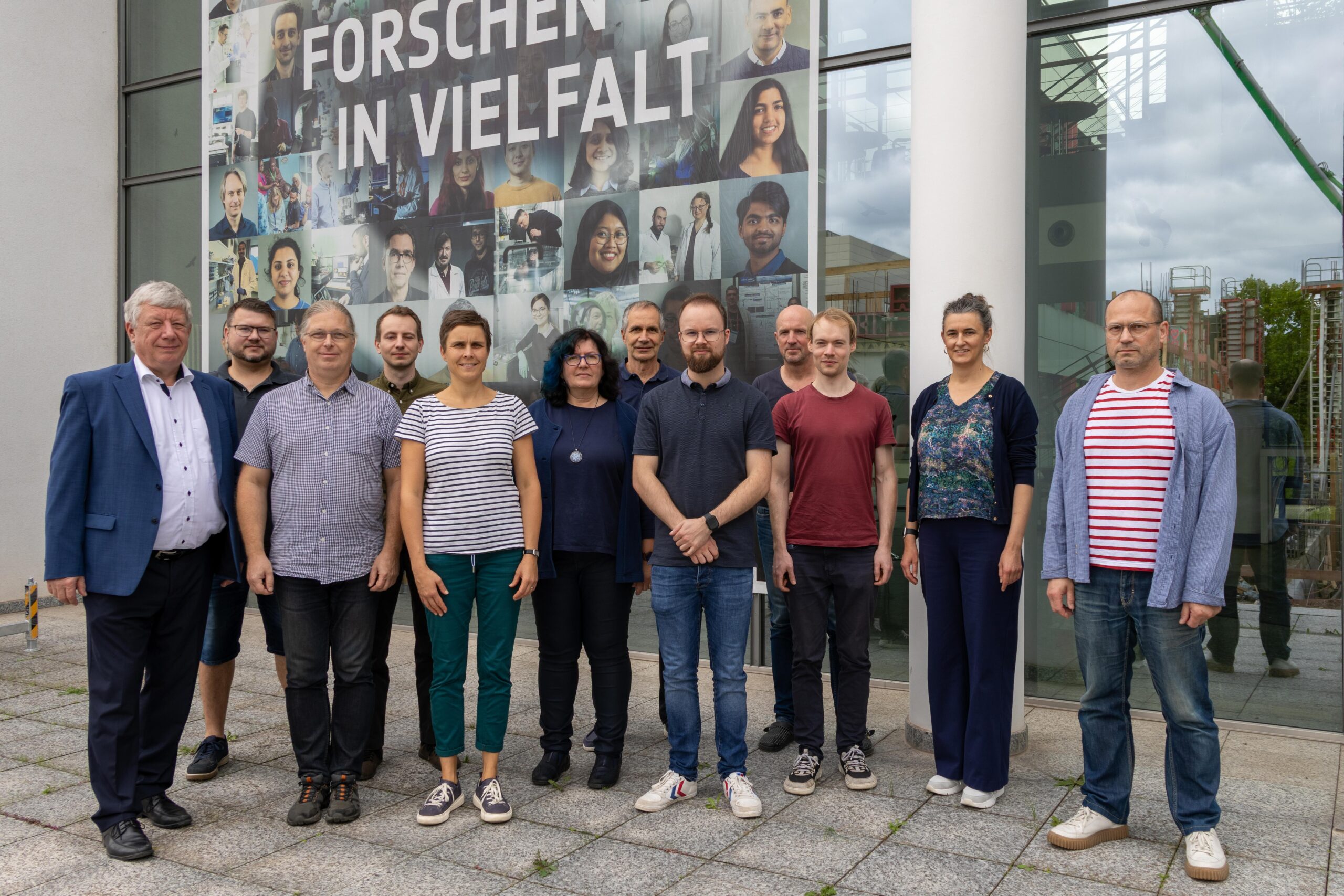
Friedrich Schiller University Jena (Coordinator: Prof. Dr. Andrey Turchanin; Turchanin Group: development of novel sensors based on the 2D material graphene; Stelter Group: advancement of separation column technology)
-
Analytik Jena GmbH+Co. KG (mass spectrometry and integration of sensor technology into existing analytical platforms)
-
Leibniz Institute of Photonic Technology (lithographic device fabrication)
-
IMMS – Institute for Microelectronic and Mechatronic Systems (IMMS GmbH) & LUCAS Instruments GmbH (electronic data acquisition and control systems)
-
Microfluidic ChipShop GmbH (microfluidics development)
The MikroGraph system is based on a novel graphene field-effect transistor technology, combined with established components from separation column and mass spectrometry technologies.
“Our goal is to develop a modular, highly sensitive, and adaptable measurement system that is suitable not only for wastewater treatment plants but also for other applications in public and population health protection,” explains Prof. Dr. Andrey Turchanin, project coordinator and Professor of Physical Chemistry at Friedrich Schiller University Jena.
“With our technological capabilities in lithography and thin-film structuring, we fabricate in our cleanroom the microscopic structures that form the basis of the project’s graphene sensors. This enables the detection of even very low traces of micropollutants and allows direct on-site monitoring of water quality,” says Dirk Franke, Technical Director of the Cleanroom at Leibniz IPHT.
“With our technological capabilities in lithography and thin-film structuring, we fabricate in our cleanroom the microscopic structures that form the basis of the project’s graphene sensors. This enables the detection of even very low traces of micropollutants and allows direct on-site monitoring of water quality,” says Dirk Franke, Technical Director of the Cleanroom at Leibniz IPHT.
“The combination of highly sensitive graphene-based sensor technology and innovative laboratory solutions opens up new possibilities for environmental analytics—both in research and routine applications,” explains Oliver Klaeffling, CEO of the Analytik Jena Group. “In doing so, we make an important contribution to implementing future EU requirements and to sustainably safeguarding water quality.”
In view of climate change, population growth, and rising demand for drinking water, water suppliers, industry, and agriculture will increasingly depend on raw water from lakes, rivers, and bank filtrates. At the same time, the growing contamination of surface waters poses increasing challenges.
New sensor systems can make a decisive contribution to protecting consumer health while continuously monitoring the effectiveness of purification processes.
The new Thuringian research consortium has the potential to surpass the current state of the art in environmental analytics and to significantly strengthen the region through new processes, products, and services in the fields of “Healthy Living and Healthcare Industry” and “Sustainable Energy and Resource Use.”
The MikroGraph project is funded by the Free State of Thuringia, represented by the Thuringian Ministry for Economic Affairs, Agriculture and Rural Areas, with resources from the European Regional Development Fund (ERDF). The project strengthens Thuringia as an innovation location in the areas of Healthy Living and Healthcare Industry as well as Sustainable Energy and Resource Use.
Author: Ute Schönfelder, University of Jena; joint press release of the “MikroGraph” consortium partners
Contact

Related News
Third party cookies & scripts
This site uses cookies. For optimal performance, smooth social media and promotional use, it is recommended that you agree to third party cookies and scripts. This may involve sharing information about your use of the third-party social media, advertising and analytics website.
For more information, see privacy policy and imprint.
Which cookies & scripts and the associated processing of your personal data do you agree with?
You can change your preferences anytime by visiting privacy policy.