

Research Team Develops Geophysical Exploration Strategies for Raw Materials

17. April 2026
In the new joint project DESMEX-MinD, researchers at Leibniz IPHT are developing innovative technologies and combined approaches together with academic and industrial partners, with the aim of enabling more precise exploration of mineral resources at greater depths. The mining regions of the Ore Mountains (Erzgebirge) and the Upper Harz are a particular focus.
DESMEX-MinD builds on the successful predecessor projects DESMEX, DESMEX II and DESMEX-REAL, in which the novel exploration method Semi-Airborne Electromagnetics (sAEM) was developed and tested in various international field sites. This technology combines ground-based current sources with highly sensitive magnetic field sensors developed in the Quantum Systems Research Department at Leibniz IPHT. These sensors are towed through the air using drones or helicopters. This enables efficient, high-resolution mapping of the geophysical properties of subsurface sediments and rocks over large areas and down to depths of up to 1,000 meters. The evaluation software developed at the LIAG Institute for Applied Geophysics generates three-dimensional models of electrical conductivity based on the measured data, providing indications of mineralization in the subsurface.
The geophysical methods research is funded by the Federal Ministry for Research, Technology and Space (BMFTR) with €3.8 million.
New technologies for sustainable resource exploration
A central objective of DESMEX-MinD is to overcome existing barriers to the success of exploration programs. To this end, innovative measurement techniques, data processing strategies and 3D inversion methods are being combined. Particular emphasis is placed on advancing evaluation methodologies, AI-based prediction approaches and integrated interpretation of geophysical, geological and geochemical data, with the aim of improving compatibility with established industrial exploration workflows.
“With DESMEX-MinD, we are advancing our developments from basic research toward practical application,” explains Dr. Pritam Yogeshwar, scientist at the LIAG Institute for Applied Geophysics in Hanover. “Our goal is to enhance the success rates of exploration programs using innovative geophysical methods and to open up sustainable, non-destructive approaches to resource exploration.”
3D model-based analysis planned
The Upper Harz and the Ore Mountains are among the most important historic mining regions in Germany. Their resource-rich and geologically complex subsurface makes them ideal research areas for DESMEX-MinD. In addition to methodological developments, the research team aims to achieve an integrated understanding of mineral systems in both regions. For this purpose, geophysical measurement data will be combined with geological and geochemical information in three-dimensional models. These models provide an important basis for identifying potential ore deposits and planning future exploration activities.
Research for future resource security and knowledge transfer
DESMEX-MinD makes an important contribution to securing the supply of raw materials in Germany and Europe. The complex exploration approach is intended to be transferred from research into continuous industrial practice, enabling not only the exploration of ore deposits but also, for example, the investigation of deep groundwater reservoirs.
First helicopter surveys planned for autumn 2026
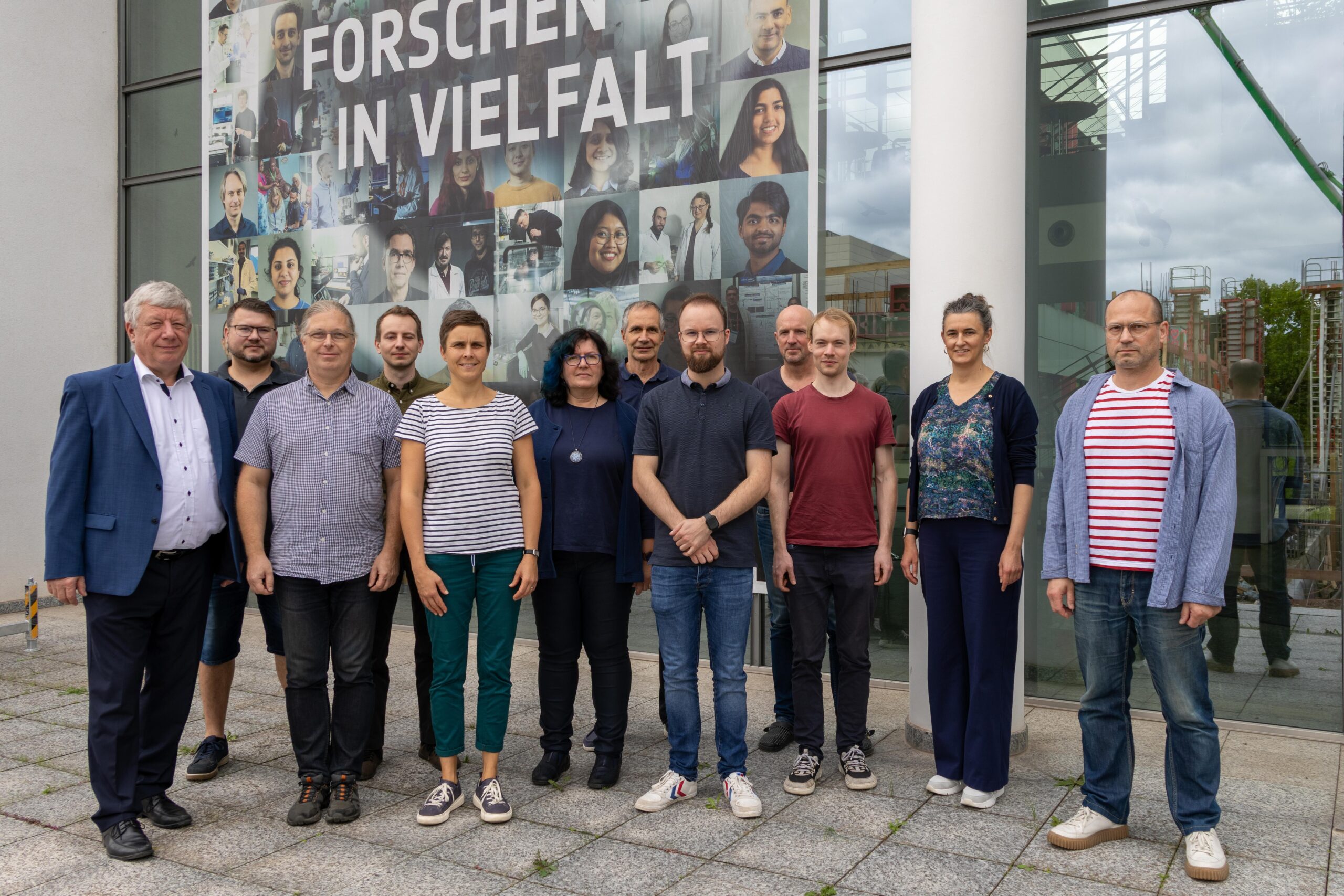
The project’s kick-off meeting took place in Münster in spring and marked the official start of the collaboration. Extensive field campaigns and further methodological developments are planned for the coming years. The first helicopter-based surveys are scheduled for autumn 2026.
Text: Greta Clasen, LIAG Institute for Applied Geophysics (LIAG)