

ICOB 2026: Biophotonics Between Research and Application

22. März 2026
The international conference in the U.S. explores how biophotonics can be more strongly focused on medical applications and translation.
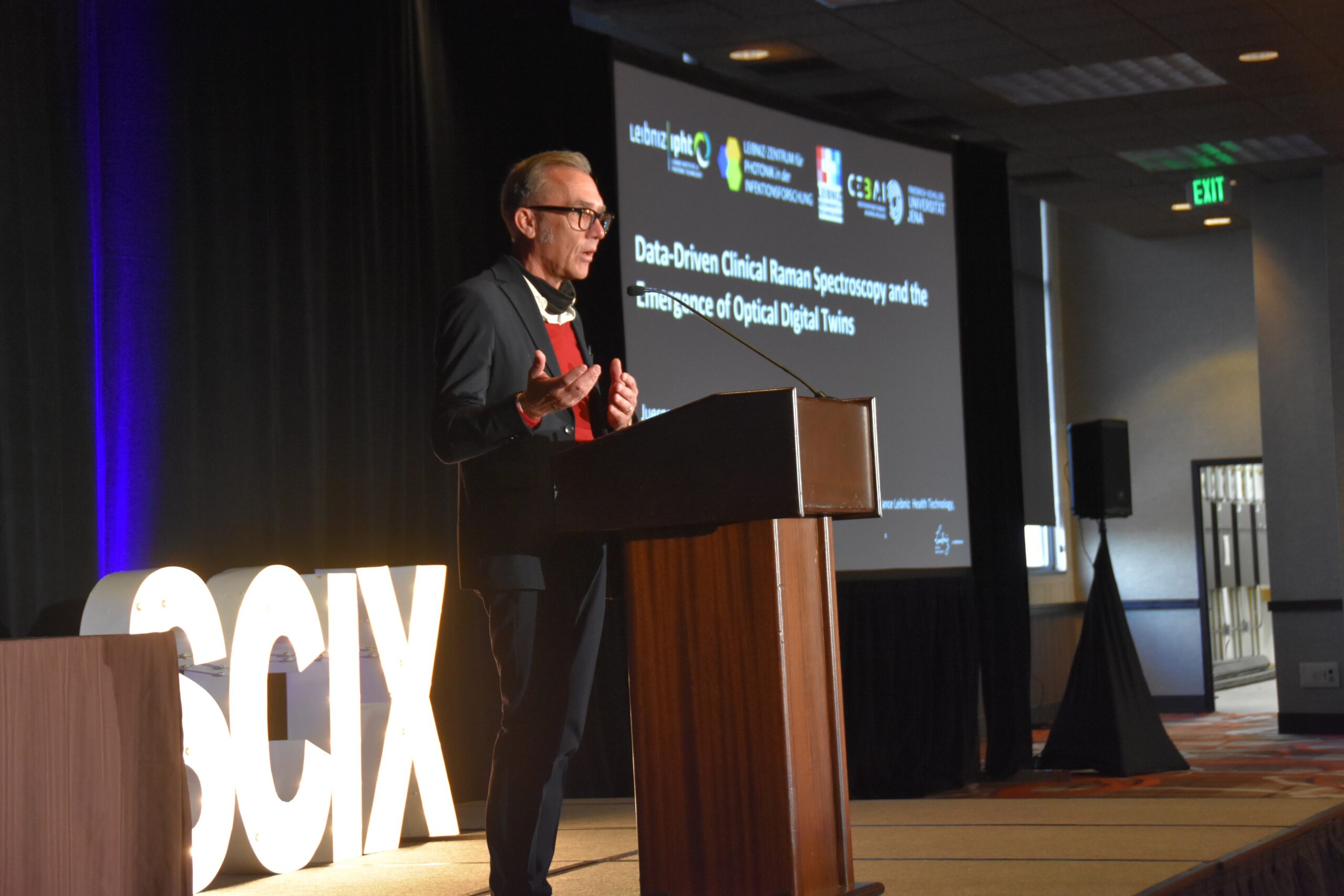
At the International Congress on Biophotonics (ICOB) 2026, held at the University at Albany, leading experts from science, medicine, industry, and policy gathered to discuss the future of light-based technologies in the life sciences. Co-organized with the Leibniz Institute of Photonic Technology (Leibniz-IPHT), the congress underscored the extent to which the field is currently evolving.
Biophotonics—the use of light to probe biological processes and to improve medical diagnostics and therapy—has seen substantial technological advances in recent years. At the same time, the focus is shifting: from demonstrating what can be measured to delivering tangible benefits for patients.
From Measurement to Impact
“The key question is no longer what we can measure, but what impact we can achieve,” said Jürgen Popp, Scientific Director of the Leibniz-IPHT, in his opening remarks. Biophotonics, he noted, is at a turning point—from technology-driven development toward impact-oriented innovation.
This shift was a central theme throughout the congress. Talks and panel discussions addressed how research results can be translated more rapidly and effectively into clinical practice—from early disease detection to personalized therapies.
Building Structures for Translation
One example of this translational approach is the Center for Biophotonic Technologies and Artificial Intelligence (CeBAI), established in 2024 as a joint initiative of the University at Albany and the Leibniz-IPHT. The center aims to integrate biophotonics and artificial intelligence to accelerate the development of new diagnostic and therapeutic solutions.
At the heart of this vision are data-driven models, such as “personalized optical digital twins,” which are digital representations of patients based on continuously updated biophotonic measurement data. The RamanHealthAssay™ could be the key technology for achieving this. It extracts spectro-molecular patterns from longitudinal measurement data reflecting individual health and fitness status, enabling continuous adaptation of the digital twins. In the future, these systems could detect disease processes early, predict their progression, and optimize therapies in real time.
Collaboration as a Prerequisite
Achieving this goal requires close collaboration. “Technology alone is not sufficient,” Popp emphasized. Progress depends on linking disciplines, institutions, and continents, and on working closely with clinical partners, industry, and regulatory bodies. Only then can promising prototypes be translated into solutions that reach everyday practice.
ICOB 2026 thus highlighted the guiding principle of the Leibniz-IPHT: research not as an end in itself, but as a starting point for real-world application—“a bridge from understanding life to improving life,” as Popp put it.
From White Paper to Implementation
This trajectory builds directly on the previous congress: ICOB 2024, hosted by the Leibniz-IPHT in Jena, brought together more than 350 international experts. The meeting resulted in a white paper outlining key barriers to translation and proposing a strategic roadmap for the coming decade.
Initiatives such as CeBAI are now beginning to implement these recommendations, translating them into concrete structures designed to accelerate the transfer of biophotonic innovations from research into application.
More information about ICOB 2026 is available on the University at Albany website.
White Paper:
Baldini, F., Dholakia, K., French, P., Guntinas-Lichius, O., Kohler, A., Mäntele, W., Marcu, L., Sroka, R., Umapathy, S., & Popp, J. (2025). Shining a Light on the Future of Biophotonics. Journal of biophotonics, 18(7), e202500148. https://doi.org/10.1002/jbio.202500148
Text by Mike Nolan, University at Albany; Leibniz-IPHT
Photos by Patrick Dodson


Contact

Scientific Contact