


Groundbreaking Ceremony at Leibniz IPHT: New Building for Optical Health Technologies in Jena

10. September 2025
Leibniz IPHT celebrated the groundbreaking of a new research building on the Beutenberg Campus in Jena. Covering 4,680 square meters, the new facility will provide state-of-the-art laboratories, offices, and a conference area. It will create space to further advance optical health technologies as key technologies for the medicine of tomorrow and to expand new research fields such as infrared biospectroscopy and quantum biophotonics. Completion is scheduled for 2027, with commissioning planned for 2028.
“At Leibniz IPHT, our goal is to drive health technologies forward in a holistic way: technologies that not only transform medicine, but also enable safe drugs, a clean environment, and healthy nutrition,” says Prof. Dr. Jürgen Popp, Scientific Director of Leibniz IPHT. “To achieve this, we are expanding our portfolio to include infrared biospectroscopy, which allows label-free analysis of body fluids, cells, and tissues, as well as quantum biophotonics, which leverages quantum technologies for biomedical applications. Artificial intelligence connects these research fields and plays a decisive role in making diagnostics more precise, faster, and more individualized. In this way, biophotonics research at Leibniz IPHT makes a significant contribution to advancing optical health technologies and strengthens the international visibility of Jena and Thuringia in this field.”
Minister President: Technologies of tomorrow are being created in Jena
Minister President Mario Voigt emphasizes: “Research needs space – and that is precisely why we are investing in Jena in state-of-the-art laboratories and infrastructure that set new standards. With the new Biophotonics Center, we are strengthening Leibniz IPHT as a beacon, a bridge, and a driver of innovation in the Green Heart of Germany. This is where the technologies of tomorrow are created, improving all our lives and quickly finding their way from the laboratory to patients. Jena is the centerpiece of an excellent scientific landscape, where universities, institutes, and companies work closely together. This network makes Thuringia one of the most dynamic research and technology locations in Europe – and it is exactly here that the future is growing.”
Mayor: A visible sign for the future of optical technologies
Jena’s Mayor Thomas Nitzsche explains: “On the Beutenberg research campus, a vibrant ecosystem has emerged in which scientific excellence and innovative strength perfectly complement each other. The new building continues the long tradition of Jena as a center of science and business, where light in all its facets is researched, understood, and put to use. Today, we are taking the next step forward. The new biophotonics building will be a visible symbol for the future of optical technologies and their application in biomedicine.”
Strong Ties Between University and Research
Prof. Thomas Pertsch, Vice President for Research at Friedrich Schiller University Jena, emphasizes: “The close ties between the university and non-university research institutes such as Leibniz IPHT are a hallmark of Jena as a center of science. Our mutual reliance – both scientifically and structurally – is evident in joint professorial appointments, numerous research collaborations, and now in the new Biophotonics building. With cutting-edge laboratories and new spaces for exchange, we are creating even better opportunities to advance interdisciplinary projects together.”
Light as a key for health
Optical health technologies use light to make biological and medical processes visible and measurable. They provide the basis for new methods to detect diseases earlier, monitor therapies more effectively, and develop safer medicines. At Leibniz IPHT, researchers develop photonic methods and instruments – ranging from imaging and spectroscopic techniques to fiber- and chip-based solutions. Artificial intelligence plays a key role: it enables the analysis of complex image and spectral data and opens new avenues to detect patterns, personalize diagnoses, and accelerate the development of innovative procedures.
Space for research and exchange
The new building is also designed to strengthen scientific exchange: a conference area for up to 120 people will provide space for international workshops and symposia, including the established Women in Photonics career workshop, which has successfully attracted and connected young talents to Jena for years.
Background
Leibniz IPHT is located on the Beutenberg Campus in Jena. The institute’s main building was inaugurated in 1999. Since then, the institute has grown significantly: from around 200 employees to over 450 from more than 40 nations. Its work is characterized by an interdisciplinary approach: the in-house fiber drawing tower produces optical specialty fibers, for example for endoscopes or cancer diagnostics, while the cleanroom is used to manufacture photonic chips and sensors. Research and technology thus go hand in hand to bring new solutions into application more quickly. The research profile is clearly focused on optical health technologies: developing light-based methods for medical diagnostics, pharmaceuticals, process control, as well as food and environmental safety, supported by artificial intelligence. The institute’s goal is to accelerate translation and bring research results into practice more efficiently.
The construction project is funded with a total of 29 million euros by the federal and state governments.
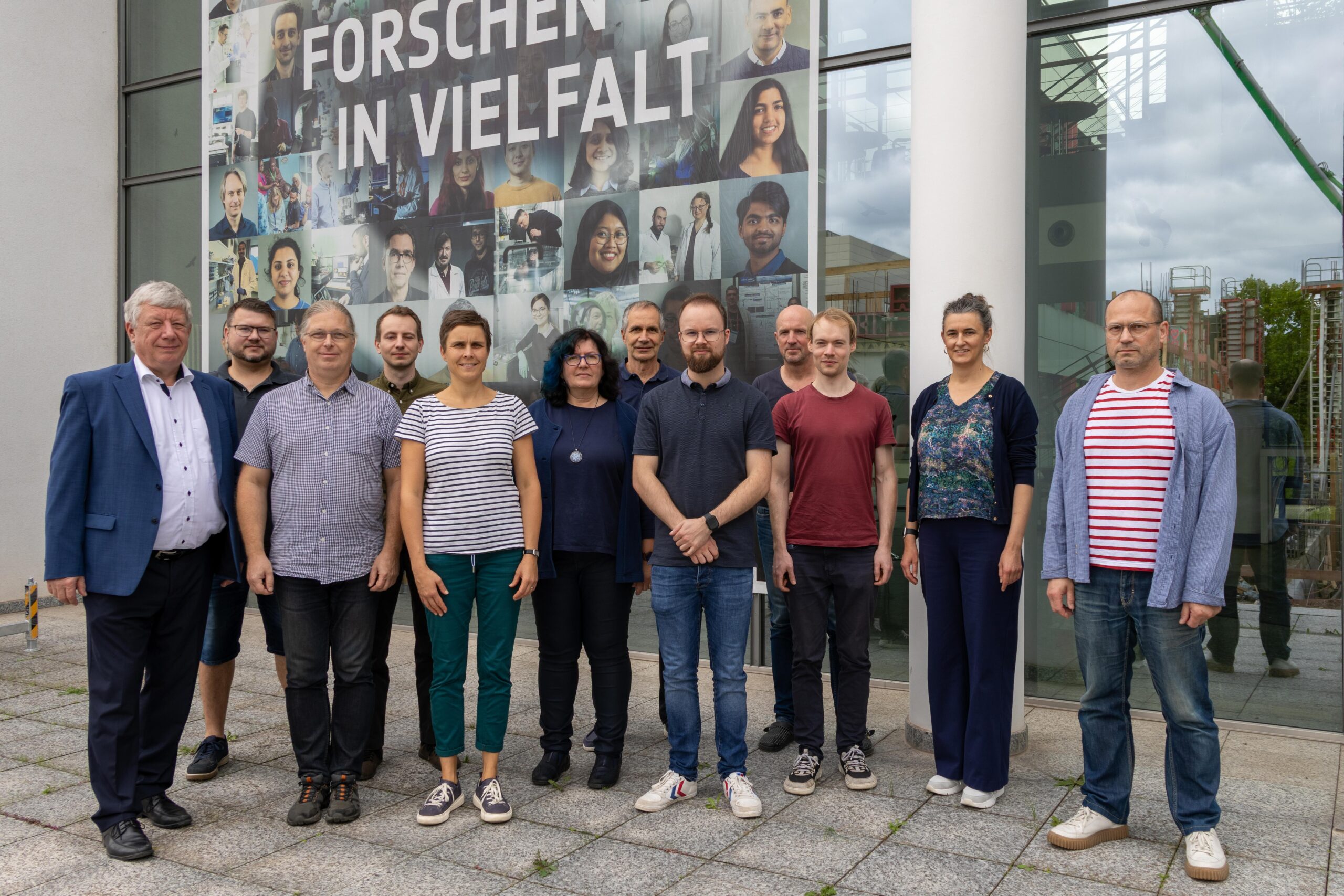
Photo: Henry Sowinski
Contact

Related News

Third party cookies & scripts
This site uses cookies. For optimal performance, smooth social media and promotional use, it is recommended that you agree to third party cookies and scripts. This may involve sharing information about your use of the third-party social media, advertising and analytics website.
For more information, see privacy policy and imprint.
Which cookies & scripts and the associated processing of your personal data do you agree with?
You can change your preferences anytime by visiting privacy policy.